Archive for January, 2009

How do you know when to start drafting?

Posted in On Writing  by John Brown on January 20th, 2009
Comments Off

This week’s Writing Excuses was an interesting topic. I’ve had similar questions from folks as I give my workshop on writing fiction. Here are some additions to the excellent comments made by our fearless Three.

Can you plan for a single draft?

In my experience and those of other published writers I know, wanting to start to draft only when you’re ready to begin writing THE draft that will take you clear to the end is only going to land you into a bog of dither.

Here’s why. It’s almost impossible to know if this attempt at the hill is going to work until you make the attempt at the hill. Much of the story creation, even for those who do a lot of the creation in summary/outline form first, still takes place in the drafting. And you never know if something you create while drafting is going to throw a monkey wrench into the whole thing.

Nobody I know who does a lot of development in the outline/summary form (and I’m one of those) has ever written a satisfactory novel without having to continually modify the original outline or abandon it altogether. David Farland tells a story of getting to the ending of one novel, the ENDING, and only then seeing a new ending that was going to be so much better than the one he planned. Which meant he needed a different beginning. Which meant a rewrite. And so he started the whole freaking story over.

Writing is like blazing a trail

Writing a novel is like seeing a far off destination that you’ve never been to before and to which there are no roads. You’ve got to make a trail to that destination. So when you set out you may be able to see a path for a mile or so, you may even have tried to get an overview of the terrain, but you must reconcile yourself to the fact that you are going to run into an impassable bog, or a cliff, or killer bees–you’re going to have dead-ends and backtracks.

No matter what you do, it’s gonna happen. It’s just part of the nature of blazing trails. Even if you scout out possible routes, some of those routes are just not going to work when the wagon train finally gets there.

This isn’t to say we must all become draft-only writers. There is HUGE value to some of us in having a starting line-up or knowing the ending or having the bare bones of the plot or having done a good deal of world building. For myself, I’ve learned I never get very far down any path if I don’t have a number of strong ideas for all the parts of story–character, setting, problem, and plot. But I only learned that by setting off time and time again and each time immediately having to stop. And new writers will never learn what they need, as was said, until they just start.

So if the reality is that every author is going to have hiccups and course changes along the way, then it’s far more important and useful and efficient, not to wait for the perfect moment to draft, and draft the story only once, but to just start drafting.

But how much pre-draft work is too much?

Okay, for those of you who want a specific number, let me help you. A new writer recently posted a question wondering if she migh have world-builders disease. Here was my response.

Ms. X, one way to approach your diagnosis is to determine how many books per year you want to write. Because world-builders disease is only a malady in certain circumstances.

If you don’t care about output and simply enjoy building worlds, then maybe you’re like Tolkien. He started The Book of Lost Tales in 1917 and didn’t finish THE HOBBIT until 1937 (20 years). He didn’t finish LOTR until 1949 (another 12 years). In this is your situation, then you are hale and hearty and have many years of enjoyment ahead of you.

If you DO care about output and want to write one book per year, then I’d suggest you get some drafting treatment immediately. Here’s why: you now have only 26 weeks to finish.

But wait: take out 4 weeks for vacation, sickness, relatives, and mosquito infestations. You now have 22 weeks.

Assume you get 2 good hours of writing 6 days a week for 12 hours a week. Assume further that you can get a conservative 500 words of finished product per hour, or 1,000 words in 2 hours. (Sure you may be able to write faster than that in any given session, but when you go back and fiddle with it the next day and the next, you have to accout for that.)

At this rate it will take you 17 weeks to finish a 100,000 word novel. And that’s only if you keep your story furnace hot with consistent hours each day.

But wait: that’s only a FIRST draft. You now need to let it sit a bit. Reread it. Send it out to readers. Then REVISE. You only have 5 weeks to do that!

Of course, your inputs to the equation might differ. But if your goal is a book a year, you need to get cracking. Most of your development will come as you write. It’s exciting and lovely. Don’t miss it. Get your starting line up written out in the next three days and then take the plunge.

Share

Tags: ,

Why capture zing if you don’t use most of it?

Posted in On Writing  by John Brown on January 19th, 2009
Comments Off

I agree that the ability to develop and finish a story is more important, and rare, than coming up with or capturing random ideas, especially since “ideas” can be something as small as a two word sentence from your daughter or the colors on some weird bug that you found hiding out in a teacup in your cupboard. Finding one of those is like finding one brick for a 50,000 brick house. Big whoop.

I also agree that ideas captured in a journal or file of some sort is NOT the only way to start developing a story. Getting a prompt or story parameters, writing to specifications, is obviously a perfect spot to begin as well (e.g. get me a SF story no longer than 6,000 words by Dec 15th that includes a bug). It is, if you think about it, just another type of starter idea. Going from image to story parameters or from parameters to story images–I don’t think the order matters. They’re both aspects of the story that need to be eventually developed. And we all know that stories can start from seeds of all types–character, image, line, issue, setting, problem, technology, AND parameters. What makes a prompt for a real gig powerful is that it pushes you farther down the path from one brick to house. It does this because a huge part of getting a story written depends on making decisions, getting specific. And on getting the motivation to buckle down and finish the thing.

I’m also going to bet that for all writers MOST of the elements (dialog, plot, character, setting) of any story are generated during the pre-draft planning (including research) and drafting–during the actual writing. Not by continually ransacking idea files like some people do their closets, trying to find pants, shirts, and shoes that will make an outfit. Like most anything else, we generate things (ideas in this case) only when they’re needed.

It’s true we have to care about and believe in what we’re writing. But I don’t think how any story gets started is significant. Partially because no matter how big the initial idea, it’s still small compared to everything else that must be generated. But more importantly because I think just starting is the key, whether that’s motivated by shot of zing or a deadline or whatever. I say this because I’ve found that zing strikes me more when I’m on the move working.

So if the vast majority of captured ideas are never used, why observe and capture at all?

Here are my personal reasons.

1) Because when I fail to consume new sights, people, ideas, and experiences, I tend to keep using the same things over and over in stories–lines, descriptions, plot turns, etc. Doing this actually helps me see new possibilities and go beyond my current ken.

2) While I forget most of what goes into the file, I don’t forget everything. When I’m working, the context of the story often evokes memories of some of these things I’ve captured.

3) Because when I’m on the lookout, I tend to see more. And current idea captures are a great source for random juxtaposition for the current project. I’m writing a story, go on a walk, and see in the snow a raccoon splayed out spead eagle on the side of the road like it’s been sacrificed, its belly torn open, the cavity completely hollow, four thin, almost translucent, ribs rising to the sky. There is some blood, but not much, and where it has fallen the snow is Valentine pink. There’s nothing else around the animal but a multitude of bird tracks and a few dark strings of disconnected and frozen gut. Because this signals story idea to me, I stop and pause to get more details. I write them up, look a bit closer, sketch it. And the impossible to imagine random detail goes into the current story to work its magic.

4) Because being on the lookout just brings more zest to my life. The universe offers up a small wonder or dread to me, and if I’m trying to be alert, I’m more apt to see it, cherish it, if only for a moment, and go my way rejoicing.

Share

Tags: ,

Joss Whedon on the New Media

Posted in On Writing  by John Brown on January 19th, 2009
Comments Off

Here are some thoughts from the man who brought you Dr. Horrible’s Sing-a-long Blog and Serenity about the future of movies. I’m suspecting a lot of time-lengths and form that weren’t possible given the constraints of TV and theaters will start to rise.

Share

Tags: ,

A Great Reason To Always Check Your Child’s Homework

Posted in Zing  by John Brown on January 18th, 2009
Comments Off

Note sent, the next school day, with the 1st grader…

Dear Ms. Williams,

That’s not a dance pole on a stage in a strip joint! I work at Home Depot. That’s me selling a shovel.

Cathy’s mother,
Mrs. Smith

(thanks to my wonderful wife for passing that one on.)

Share

Tags:

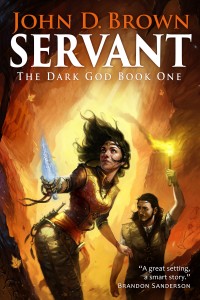
Advance Praise for Servant of a Dark God

Posted in News - updates on books, events, appearances, etc.  by John Brown on January 15th, 2009
Comments Off

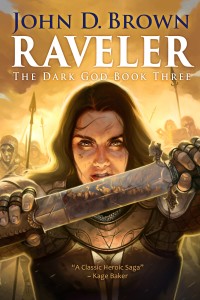
My editor just emailed me another endorsement from one of the folks we sent the manuscript to. I’m so excited! This one’s from Kage Baker.

I’m a total stranger to three of the four that have responded so far. It continually amazes me how generous the pros in this genre are with both their time and praise.

Here’s the last one.

“A classic heroic saga, dealing with the bedrock issues of good and evil and identity. These are classic themes because they matter; and Brown makes them matter both to his young protagonist and the reader. It promises to continue for quite a distance, and I hope it does.”

Kage Baker, author of House of the Stag and The Company series.

Here are the previous ones.

“Thoroughly engrossing from the first page to the last! John Brown shows himself to be a writer with remarkable depth and power. I haven’t seen a debut novel this good in years!”

David Farland, New York Times best-selling author of Runelords and Ravenspell series

“In Servant of a Dark God, John Brown has created a complex and intricate world, filled with all the permutations of human good and evil, as well as evil that goes beyond the human, where neither heroes nor villains are quite what they seem at first, and where the cost of virtue is high indeed, yet where, in the end, the tenacity of such virtue is what is required to triumph.”

L. E. Modesitt, Jr., award-winning author of the Recluce Saga

“A complex, powerful story of a youth trying to learn who he is and what he is, with no allies he can trust in a world stalked by a monster. A book that copies nothing I have read before and which goes its own way brilliantly.”

David Drake, author of the popular Hammer’s Slammers and Lord of Isles series

Wow. I think I want to read this book!

Share

Tags: , , , ,

Villainous Heroes

Posted in On Writing  by John Brown on January 15th, 2009
Comments Off

If we root against villains based on moral judgments, then how is it possible to root for heroes who are not just bad boys but down right criminal, e.g. hitmen, mobsters, thieves?

It’s a wonderful question that has a simple and revealing explanation.  We root for these bad guys because they’re really good.

What?!

When talking about bad heroes, what we often do is:

1. Take them out of their context.
2. Focus on one or two negative traits, not the person as a whole.
3. Abstract them and miss what’s happening in real time as we process the story. We only have so much working memory and usually can only think about what’s being presented versus what we think about when we’re out of the story. What’s being presented in the story is mostly the threats to these heroes, not the consequences of their evil deeds. And if the consequences are show, it’s always modified by context (#1 and #2 above).
4. Confuse fascination with rooting.

When we actually look at what’s happening with the hero in the context of the story, what we find is that rooting is still based on moral judgments of who is good/right and who is not. We root for people we think are in the right (given their context) or are getting, undeservedly, the short end of the stick; we root against people who we think are in the wrong.

Here are some examples.

DISNEY’S ALADDIN

Thief. This one’s easy, I grant it. But it’s illustrative. I never once didn’t root for the boy. But I also never saw him as a true bad boy. He was nice. He shared the bread he stole with kids less fortunate. The guards were mean brutes. Jaffar was wicked and threatened the sultan and Jasmine who were good and innocent. was in a situation that provided some leeway for his behavior (alone, penniless).

1. Context. He’s fighting a much greater evil, someone we are rooting against.
2. Whole Person. He is a thief, but he’s also kind. Given his whole person, he falls on the side of good.
3. Processing. As we process the story we’re never shown awful consequnces of his theiving. Mostly just the good and courageous things he does. And the threats to his welfare.

THE ITALIAN JOB

Thieves.

1. Context. The movie starts with a heist and then a betrayal and murders by a traitor. Yes they’re theives, but we wittness a greater evil. The people they fight against are worse than they are.
2. Whole person. Except for the thieving, he’s a likeable guy.
3. Processing. We see few negative consequences of their actions to others, but we are constantly being presented with threats to them by guys who are committing greater crimes.
4. Fascination. I was incredibly interested in the scam–the plans, tech, everything.

THE PROFESSIONAL

Mob Hit Man

1. Context. He’s protecting a girl from other hit men. He’s fighting a bigger evil. He’s also taken advantage of by his boss.
2. Whole Person. He’s a hitman, but more time is spent on his kindness.
3. Processing. We see very little of the effect his hits have on others. Instead we are presented with threats to the girl and him.

DIRTY HARRY

Murdering vigilante

1. Context. He’s stopping guys who are doing terrible things.
3. Processing. We don’t focus on negative consequences of his vigilantism, but the threats from these really bad guys.

MATCHSTICK MEN

Scammers of the elderly

From IMDB “Roy’s private life, however, is not so successful. An obsessive-compulsive agoraphobe with no personal relationships to call his own, Roy is barely hanging on to his wits, and when his idiosyncrasies begin to threaten his criminal productivity he’s forced to seek the help of a psychoanalyst just to keep him in working order. While Roy is looking for a quick fix, his therapy begets more than he bargained for: the revelation that he has a teenage daughter–a child whose existence he suspected but never dared confirm. What’s more troubling, 14-year-old Angela wants to meet the father she never knew. At first, Angela’s appearance disrupts her neurotic father’s carefully ordered routine. Soon, however, with his own unique spin on parenthood, Roy begins to enjoy a relationship he never dreamed of having with his daughter.”

1. Context. Much of the time is spent his on his loneliness and issues with his estranged daughter.
2. Whole person. He steals, but we never see huge suffering from it. We see all the other issues he deals and have sympathy for him.
3. Processing. We’re focused on the threats to him, not the consequences of his one negative trait.
4. Fascination. I was fascinated by the scam and this pulled me along through the first.

CONCLUSION

What happened in all these stories as I experienced them was that the story carefully managed my view of the hero. He was always on the better side of the antagonists. He was always more good than bad, even if only by a little. And the story focused my attention most of the time on the bad/threats/consequences flowing from the antagonists, not the bad from the hero’s deeds.

What this shows is that you could write a story about a villain and make him the hero. In some instances it might be exceedingly difficult. For example, I think Hitler would be a hard sell as a hero, someone we’d root for. But the Neo-Nazis prove it’s not too hard a sell for some people. 

I don’t think recognizing the fact that we can make “bad” people sympathetic means authors are “simply being clever” or “pushing buttons.” After all, to write well you must believe and care about what you’re writing about. YOU have to believe it. Nor do I think it undercuts the notion that we root for people based on a moral stance. It just recognizes the fact that moral judgments, in fact, the vast majority of appraisals of situations, happen quickly with the facts at hand, which are the ones in our working memories. The ones the authors are controlling.

Share

Tags: ,