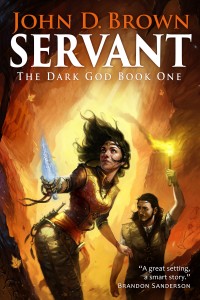
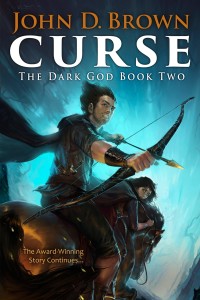
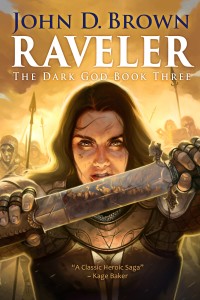
Holy schmoly, has this been a ride. I projected the CURSE OF A DARK GOD to be 140,000 words. When I blew by that, I projected it would be 170,000. Today I just typed the last word of the first draft. It’s 230,000 words. For reference SERVANT OF A DARK GOD is 170,000 words.
The bad news is that while I’m really happy with this draft, it IS a first draft and needs some editing. I’m also behind schedule. I hit 140k words just a few weeks after my original deadline (in March), so I pride myself on knowing how fast I can write, but at that point I had, unknowingly, about a normal novel’s worth of material left to write. Obviously, I haven’t quite figured out yet how to estimate the size of these bigger works. The problem is that instead of getting a month or even two to revise, I’ve got two days. Then I have to turn it in to my editors.
The good news is that my editors haven’t canned me, yet.
And that they have great insight into story. And that I should have plenty of time to fix and polish this thing to make it shine. I just don’t like turning in first drafts. My goal with book three is to get back on schedule.
Having told you my scheduling woes, I am very excited about the characters and storylines and expect readers to enjoy this as much or more than the first in the series. However, I do wish I could get this process down so that I was 99% of the way there in one draft. There are some authors who can do that. Perhaps that will come with more experience. Until then, I get to enjoy revision.
Here are my stats:
- 550 hours to write, from pre-draft to the end, not including thinking thinking on walks and drives and discussion time with my wife who saved me thrice.
- The bulk of the writing was done in a 24 week period. I averaged 17 hours per week during that time. This is on top of my day job.
For those who don’t know, an average young adult book as from 40,000 to 80,000 words. An average adult novel is from 70,000 – 120,000 words. I’m very pleased I was able to finish this monster. I might not be the fastest writer, but what this tells me is that I should be able to finish two big novels a year if I should ever be so lucky as to go full time.
Tags: Curse of a dark god
Posted in
Zing by John Brown on June 25th, 2009
Comments Off
James Maxey loved met and loved a woman named Laura. She told him she had breast cancer. He didn’t care. Later when the disease advanced, he offered to marry her. She turned him down, but not because she didn’t love him back. The disease progressed.
His posts about this experience are tender and poignant. When you read them you will rejoice. You will sorrow. And you will think about life.
He begins like this:
She was dying when I met her. We met through online personal ads, and she wrote me saying that she liked the philosophy I had sprinkled through my post. I don’t even recall what it said, really–something about finding humor and hope even in down times, I think. And she told me she’d been through some down times. She’d fought breast cancer, her husband had left her when she was diagnosed with the disease. This might send other people into a spiral of despair and self-pity that they could never pull out of. But, she hadn’t surrendered to her worries and woes. She bested them, and went on to live a terrific life. She had gotten a butterfly tattoo–it was her symbol of transformation. The time of her cancer and her divorce were when she had been drawn into her cocoon. But she’d emerged with wings.
Here are the five I would read. They’re short. So take some time. Savor them.
- Laura Kathleen Herrmann
- Laura and the Flowers
- Laura’s Snow
- Cancer on the Comics Page
- One Year
When you finish, you might then want receive a free book of his in exchange for a donation (of any size; yes, even for just one buck), to the Susan G. Komen Breast Cancer foundation. To make a donation vist his Books for Breast webpage.
Then live and love while the sun shines. And be glad.
Tags: books for breasts, James Maxey
Posted in
On Writing by John Brown on June 24th, 2009
Comments Off
The main role of villains and antagonists in stories is to generate suspense, anxiety, and fear in the reader. They make it possible for us to worry that the hero will not be able to avoid a significant threat or remove a lack. There are other effects–mystery, poignancy (about the human situation like in Les Mis). But those are secondary.
For the main things to happen the villain has to be a credible, significant, and immediate threat…all the way through the book until he or she is smushed or wins.
If he’s not credible, the reader realizes there is no real threat. If the threat is not significant, who cares? If it’s not immediate, again, who cares?
So how do we make a villain like that? We make him or her smart, powerful, a few steps ahead of the hero, and dedicated to doing something we root against (because it’s just plain wrong or because we love our hero and want the best for him and the villain is pitted against him). He has to be able to put the hero on his heels most of the way through the book, and our poor hero is scrambling to adjust.
You can have all sorts of villains–liked by many or few, kooky or calculating, eccentric or plain, noble or sadistic–just as long as they remain significant, immediate, and credible threats. The minute they lose threat status, the game’s over because at that point fear, anxiety, and suspense in the reader vanish.
Tags: villain
Comments Off
Everybody knows that we got into this recession because banks began lending money to people who had terrible credit ratings, right? People who didn’t have to prove they even had a job. I mean, how long are you going to stay in business when you keep handing out dough to people you never hear from again?
But is that all there is to it? And was it really just the fault of congress because they told Freddie Mac and Fannie May (the organizations that purchased loans) that they had to start purchasing these highly risky things? Or was it all those greedy Wall Streeters?
In this must-read article, “How it All Came Crashing Down,” BYU econ professors explain how we got into this mess—and what we can learn from it.
But that’s not the end of the story. Ira Glass and the folks at This American Life uncover deeper causes of the problem in their must-listen show “The Watchmen” (no, not the movie). I mean, come on, we were told these high-risk loans were as dangerous as milkshakes. Shouldn’t SOMEBODY have seen it?
President Obama keeps saying that the root of the problem was that there wasn’t enough government oversight. Sounds good, doesn’t it? We’ll get disinterested Uncle Sam to protect us from all these investment bullies. But if we dig a bit deeper, it appears that Uncle Sam was one of the major players at the root of the mess.
Ouch.
Read. Listen. They are two fabulous pieces.
Tags: recession, regulation, sub-prime
Comments Off
Take a guy who does humorous journalism, but not in the sneering sort of way, and send him out to find out more about extremists (KKK, Islamicists, etc.) and conspiracy theories (he didn’t really believe in the Bildeburgers…until he was followed), and what do you get?
Well, you get British journalist Jon Ronson.
I just listened to a wonderful interview with him on Radio West.
Don’t miss it.
Tags: audio, conspiracy theory, Jon Ronson, radio west
Comments Off
Scott Card recently wrote “Marriage needs lots of humor.” It’s an awful title for one of the best articles of his that I’ve ever read.
I’m not going to spoil it for you. But I will say that I’ve found that it’s the small things that seem to make the biggest difference in relationships. And this is one of those small things that packs a HUGE punch. But not until this article did I realize it.
And for you writers who are wanting insights on what makes characters interesting and sympathetic–there’s a little treasure trove here for you as well.
Enjoy!