Posts Tagged ‘mette harrison’

Kudos for Servant of a Dark God from author Mette Harrison

Posted in News - updates on books, events, appearances, etc.  by John Brown on October 22nd, 2009

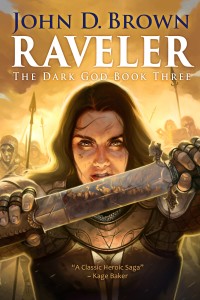
Mette Harrison is the author of Mira, Mirror, The Princess and the Hound and The Princess and the Bear (Orson Scott Card simply loves her work.) So she’s a great writer, but she is also someone who does not blurb books if she doesn’t like them. Heck, she has a hard time doing PR for her OWN work. So I was so very happy to see this review of  Servant of a Dark God.

John Brown’s book has all the great things about epic fantasy that I love. Full Review.

Share

Tags: ,

Saturday Oct 10th: author panel & book signing at Barnes & Noble in Sugarhouse, UT

Posted in News - updates on books, events, appearances, etc.  by John Brown on October 9th, 2009

Just wanted to give a heads up. I’ll be joining an author panel and book signing Saturday Oct 10th (tomorrow) at the Barnes & Noble in Sugarhouse from 12 PM – 3 PM.

Barnes & Noble
McIntyre Center (Sugarhouse)
1104 East 2100 South
Salt Lake City, UT 84106
801-463-2610

This is going to be fun. I’ll be there with authors Jessica Day George (Dragon Slippers trilogy), Larry Correia (Monster Hunter International), Mette Harrison (The Princess and the Hound, The Princess and the Bear), and Paul Genesse (The Dragon Hunters).

We’re going to participate in a panel about writing SF/Fantasy, sign and chat about our books, and then demonstrate true magic by flying above the stacks in precision formation. I think Larry’s bringing a cannon for special effects.

Okay, so my imagination got carried away. I’ll admit the panel was a bit over the top. ;)

If you’re in the area, come on by. We’ll take a few photos and sign your books. If you’re really nice, I will shower you with free bookmarks.

Share

Tags: , , , ,

How to tell an author you don’t like their book

Posted in On Writing  by John Brown on August 20th, 2009

Mette Harrison wrote a blog about how various authors respond when they read a book, don’t like it, and then the book’s author asks them directly what they thought of the book. 

Here’s my response.

As an author when I ask someone, especially another author, about their experience with my story, I’m looking for a data point to see how the book’s working or to get some insight. I realize others might be looking for validation. And, of course, I hope that everyone who reads my stuff finds nirvana even if I know that is not going to be the case. But I don’t ask unless I want data. And so I would hope they would report their experience accurately. I also hope they do it in friendly and helpful manner.

So because that’s what I want, that’s what I try to do for others.  And the sandwich+ method has been one good way for me to do that.

1. State something specific that works for me, e.g. “I love your character Bill because he’s so outrageous.”
 
2. State the key thing that’s giving me trouble. For example, I might say, “I am having a hard time with the pacing.” But then I ALWAYS want to give the context of me as reader when it applies to my reaction, e.g. I’m a terribly impatient reader, I like to feel hope in what I read and know I don’t like as much despair as many other readers do, I can’t stand clowns (this is true: clowns are some of the scariest creatures out there, second only to crocodiles). The author should know these readerly things when they apply so the author can understand where the comments are coming from.

If the book’s in pro shape and I think the issue is mostly my tastes, then it’s also useful to compare their work to another successful piece or author that had the same issue for me, e.g. “This reminds me of Twilight; I know people love it, but I just couldn’t get into that book either for the same reason.”

I don’t think this is fluff. I think it’s part of being accurate. Our reality is what we focus on. And if I make a statement that leaves an author thinking I think the work is bad, then that’s not accurate because the truth is I think I’m not in the audience.

If I think it’s a craft issue, then I highlight the main thing I think is causing the problem. A laundry list is usually useless. But thoughtful focus on the key issue can be very helpful. If I can’t tell whether it’s a taste issue or a craft issue, I admit it.

3. State something else that’s working for me, e.g. “While I just couldn’t get past all those clowns freaking me out, I did think your chapter openers were compelling. I always wanted to read more, but then, alas, clowns.”

4. The + is not just leaving statements hanging. Asking some sincere questions after demonstrates my genuine interest. And I am interested. If the book is unpublished, I might ask about their plans for the book, are they going to be doing another draft or shopping it, or if my reaction is common. If it’s published I might ask how it’s being received, what others are liking about it, and what’s next.  Maybe they tell me about another project they’re working on that sounds fascinating.

This is what I’d want an author to do for me–be accurate, interested, and friendly. In such a context, someone having issues with a story is not such a big deal. It really isn’t.

Share

Tags: , ,