• Assassin is finished!

    On Wednesday, at 8:53 PM, I finished the first draft of Assassin. 

    It clocked in at just over 97,000 words, making it the biggest book in the Drovers series. Prey was 73,000 words, Outlaws 68,000, and Sura 84,000. 

    More importantly, Assassin finishes the story arc that began with Prey. I may return to Ferran and company for another arc in the future, but I wanted these books to have a real, satisfying ending. And now they have one, if only in first-draft form. 

    Nobody but me sees the first draft of what I write. For good reason. 

    I’ll let it sit for a week or two so I can come back to it cold and discover that I’ve changed people’s clothing mid-scene, used the word sit six times in three paragraphs, and committed other literary crimes. 

    Draft two goes to my beta readers, who report where they were excited, bored, confused, or questioned my grasp of reality. 

    Draft three addresses those issues and gets a thorough line edit, even though I’ve found the best way to discover spelling errors is to think you’ve found them all and then publish your book. At that point, the devils come out of hiding and begin dancing around on the page. 

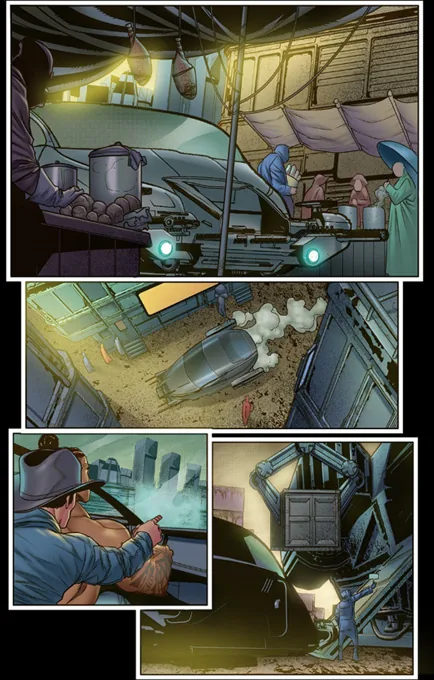
    Dixon Leavitt, the artist who created the previous three covers, will be doing this one as well. 

    If all goes well, Assassin should be out for the holidays. 

    One of my favorite discoveries in the book was a lad named Weff. 

    I didn’t set out to write Weff. I didn’t know he existed. But I was up on the hill behind my house on one of my writing walks, walking and talking to myself about the story, when he suddenly appeared. 

    Broniss has streets paved with cobblestones, and the queen wants them kept clean. The problem is that horses, oxen, and other beasts have an unfortunate habit of leaving things behind. 

    So the city has children assigned to territories whose job is to keep those streets clear. 

    They’re called muck runners. 

    And Weff is one with an enterprising mind. 

    That’s one of the delights of writing for me. Sometimes you plan a character for months. Sometimes you’re walking along a dirt road talking to yourself and a manure boy shows up. And suddenly he must have a part in the tale. 

    While you’re waiting for the big wrap up, if you’re looking for an audiobook, I highly recommend Tim Curry’s reading of Garth Nix’s Sabriel. It’s a terrific fantasy to begin with, but Curry’s performance makes it even better. His rendition of Mogget is so enjoyable you may find yourself listening a second time. 

    If you’ve heard an audiobook performance you absolutely loved, tell me. I’m always looking for the next good listen. 

    Until next time, 

    John
  • Gun Runner – Graphic Novel- Kickstarter Live Now

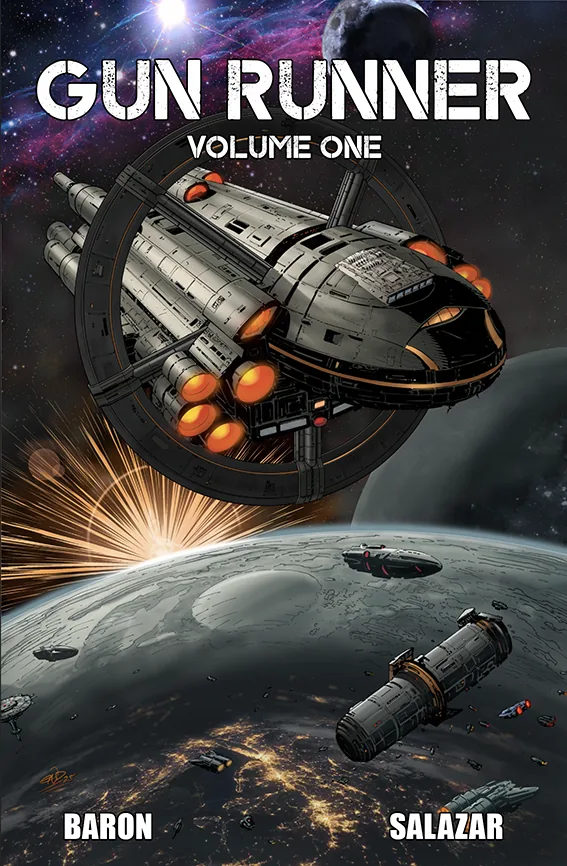
    The Dragon Award winning novel Gun Runner, by Larry Correia and me, is being adopted into a graphic novel by Hound Dog Media. The writer is the legendary Mike Baron (The Punisher, Nexus) and the art is by Marcelo Salazar.

    This is a story about a smuggler crew who specialize in stealing battle mechs and selling them to worlds that aren’t allowed to have them. The book is great. I can’t wait to see it as a graphic novel.

    This is going to be awesome. Check it out. There’s even a pledge level to get yourself drawn as a member of the crew.

  • |

    Update and Shapechanger’s Wife

    Assassin is moving along. I’m heading into the last quarter of the book, which is where the fireworks start. I appreciate all of you who have been so patient. My goal is to end this arc of the series with a bang. 

    In the meantime, I’d like to recommend a fantasy novel. I enjoyed it many years ago and recently reread it, finding myself swept away with as much intrigue and delight as the first time. 

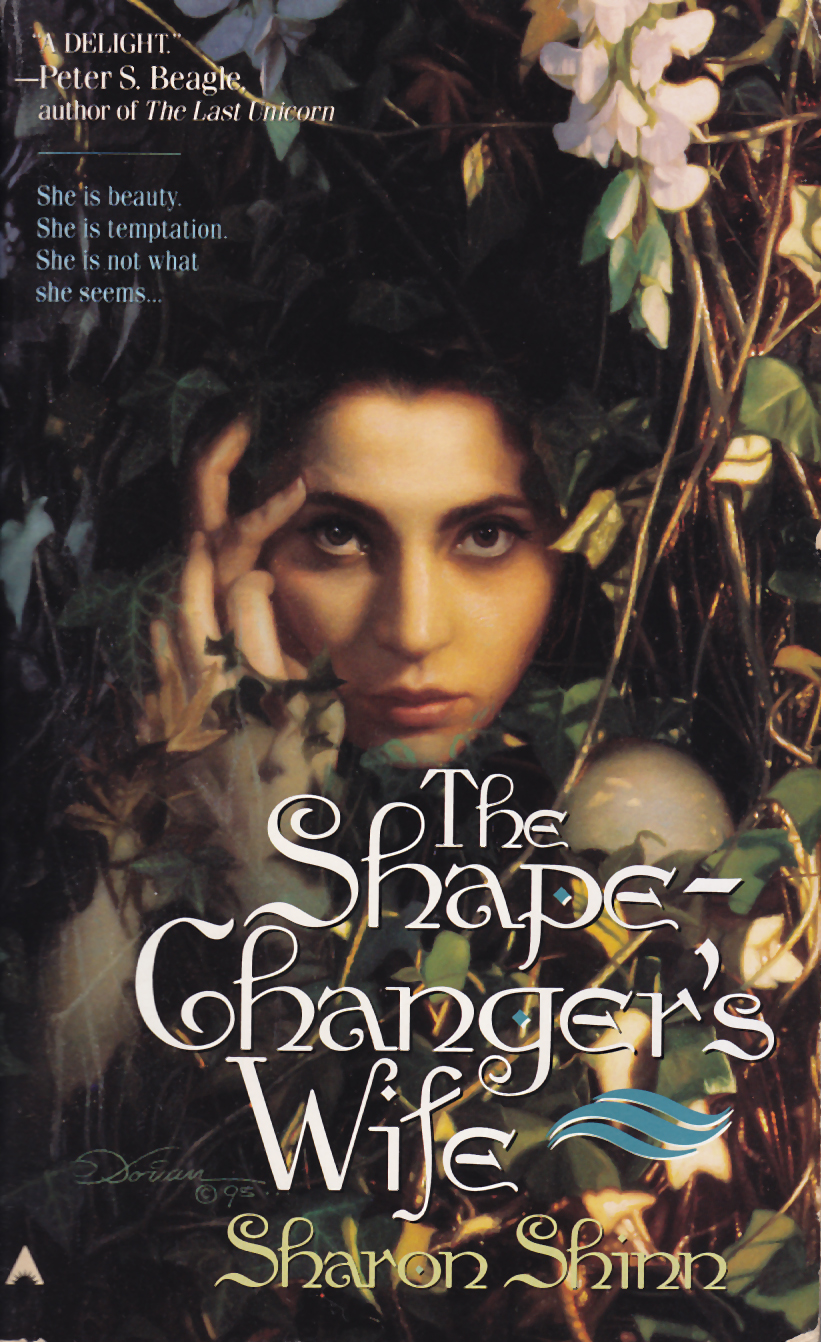
    It’s The Shapechanger’s Wife by Sharon Shinn. 

    The story follows an aspiring wizard named Aubrey who is nearing the end of his training. He asks his mentor, the wizard Cyril, to teach him transmogrification—the art of changing form—but Cyril refuses. Aubrey protests. Cyril knows the spells. He has cast them himself. Still, he refuses. 

    Eventually, however, Cyril’s conscience gets the better of him. A well-rounded wizard should know every branch of magic, even the ones Cyril dislikes. So he writes to another wizard, a shape-changer named Glyrenden, and asks if he will take Aubrey as a student. Glyrenden agrees. 

    As Aubrey sets off, Cyril gives him a warning: “Learn everything he teaches you so well you can cast his own spells back at him. Glyrenden respects only those stronger than he is, and those he hates. If you cannot beat him, he will destroy you.” 

    And so begins the tale. 

    There’s mystery, wonder, betrayal, loss, battle, and even love. Best of all, it’s a complete stand-alone novel, a rarity these days. 

    If you’re hankering for a fantasy adventure that can be read in one volume, I think you’ll be very pleased with this one. 

    Happy reading,  

    John 

  • LTUE 2026 Presentations

    I always enjoy presenting at the Life, the Universe and Everything writers conference. This year they asked me to present the following.

    The 3 Little Secrets that Make Plotting So Much Easier

    No, the secrets don’t have anything to do with the hero’s journey; 3, 7, 8, or 9 acts; Lester Dent; or cat-saving beats. An average novel has around 40 to 70 scenes. If you’re like me, those abstract plot structures spark an idea or three, then dump you in front of a blank wall. So where in the heck do all the other scenes come from? Well, a whole heap of them stand up and present themselves when you use these 3 little secrets. If you struggle with plotting, this is your chance to put that behind you for good and start generating fun and exciting plots with ease. Come learn the 3 little secrets that make plotting so much easier. 

    Here’s the handout.

    Vivid And Clear

    Despite the oft-repeated 11th commandment for writers—show, don’t tell—writers never show. They can’t. It’s all tell, tell, tell. The trick is to tell in a way that helps your readers imagine with such vividness and clarity that your story triggers an emotional response.  In this session learn the five critical prose techniques that help you do just that. 

    Here are the presentation slides.

  • A true Christmas tale from me to you

    A true story. 

    There once was a spider who climbed into a lush, seven-foot fir tree somewhere in Oregon. This happened sometime in September or October. She wove a small, silken pad deep among the needles and laid hundreds of eggs upon it. Then she spun layer after layer of silk over them, sealing them in a warm, white chamber. Her life’s work. 

    Having fulfilled the measure of her creation, she went where all spiders go. But where is that? Are spiders elegant biological machines, or are they living souls? I don’t know. Perhaps at some future date we’ll be blessed to understand such things. 

    What we do know is this: as autumn cooled, the temperature dropped below fifty degrees, and her eggs slipped into dormancy. October passed into November. And sometime in the last days of November or early December, humans with chainsaws arrived for the final harvest. 

    The tree was cut, loaded onto a truck, bundled into a refrigerated trailer, and shipped hundreds of miles away to a Smith’s Marketplace in Logan, Utah. There is stood with a number of other trees in the area just outside the front doors in the snow and cold and fluorescent lights. How many days and nights it waited there, we don’t know. But one evening, a mother and father and their four girls arrived to find their Christmas tree. 

    They walked among the evergreens, feeling for soft needles, breathing in the deep, resinous smells. They found the tree. It was perfect. They paid for it, tied it to the top of their minivan, and drove home over the mountains to the south end of the lake. Then they set it up, the father complaining, as he always did, about the goofy screw-stabilizers, strung the lights, and hung ornaments from past Christmases. The little tree filled the room with warmth, scent, and memory. 

    On Christmas morning they came down to open presents. As the sun rose, the light through the front window illuminated the tree. And something was different. 

    The branches shimmered. 

    The girls peered closer to investigate.  

    And found thin silk filaments. Everywhere. And then, to their shock, they saw that the whole tree was alive, moving with hundreds of baby spiders. A small horde that had warmed over the days and hatched silently sometime in the deep night after Santa and Mrs. Claus had gone to bed. A small horde that had then gotten to work—tiny, mad elves weaving their own gossamer garlands through the branches. 

    When the girls realized what they were seeing, there were shrieks of horror. Then the father, not knowing what else to do, escorted the tree, its decorations, and mad elves outside into the cold. The father returned, closed the door, and the whole family stood there, looking at the tree out on the deck, a bit stunned.  

    All these years later, it’s one of our family’s warm and funny memories. But if you ponder it just a little longer, it’s also one that lingers. 

    Are spiders merely elegant machines? Or are they living souls? Do they have claim upon us? Should a swarm of locusts or an infestation of roaches be preserved? 

    I will leave such questions to you, Dear Reader. 

    In the meantime, I wish you the merriest of Christmases. Whatever you believe or don’t, may you receive a measure of divine light this season—and reflect it, to brighten the world, if even just a little, for creatures both great and small. 

    John